5 For God alone, O my soul, wait in silence,
for my hope is from him.
6 He only is my rock and my salvation,
my fortress; I shall not be shaken.
7 On God rests my salvation and my glory;
my mighty rock, my refuge is God.8 Trust in him at all times, O people;
pour out your heart before him;
God is a refuge for us. Selah9 Those of low estate are but a breath;
those of high estate are a delusion;
in the balances they go up;
they are together lighter than a breath.
10 Put no trust in extortion;
set no vain hopes on robbery;
if riches increase, set not your heart on them.11 Once God has spoken;
Psalm 62:5-12 ESV
twice have I heard this:
that power belongs to God,
12 and that to you, O Lord, belongs steadfast love.
For you will render to a man
according to his work.
We put our hope into a lot of fragile things, trusting they will hold us up. Our daily lives are scaffolded by faith that the economy won’t go nuts, that the power will work when we turn on the light switch, or that eggs won’t be a million dollars today.
For my wife and I, we have flirted with poverty for most of our adult lives. I graduated in December 2008 right in the recession. At one time we were both grad students with multiple jobs trying to pay our bills on time. For us, the number in our bank account was what helped us feel “secure,” or not. It relieved the pressure of our month-to-month debit and credit, or not. This can happen when you put your hope in a checking account.
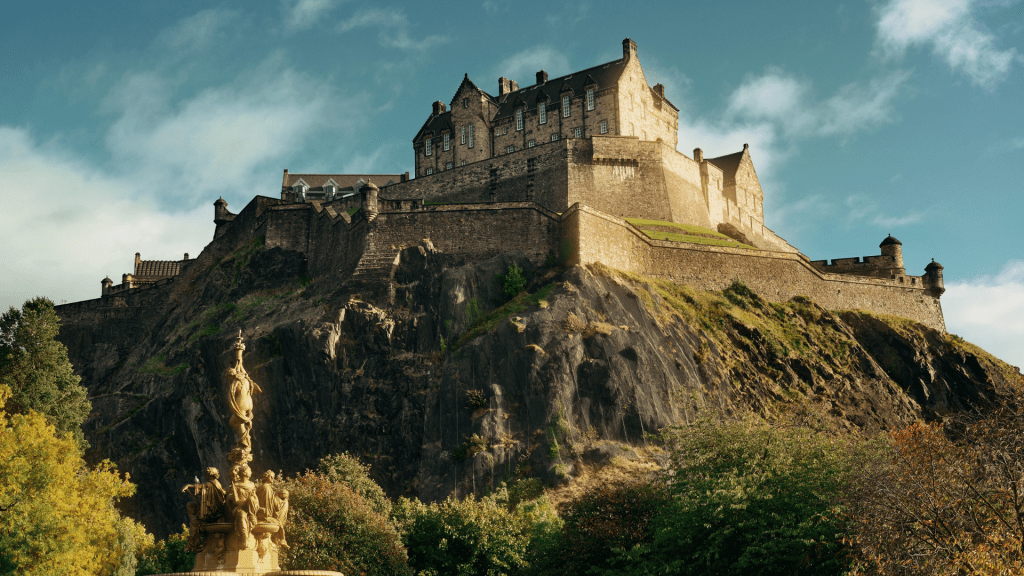
Psalm 62 says that man is but a breath. Both the lowly born and the wealthy are delusions, as substantial as exhaling (v. 9). This contrasts with the “real” substance of God, his sureness as a fortress and rock (vv. 6-7), a stable, unfragile, foundation. Only God is permanent and immutable. He does not change. He always is, and therefore he always is his attributes.
What is God?
Westminster Shorter Catechism, Question 4
God is a spirit, infinite, eternal, and unchangeable, in his being, wisdom, power, holiness, justice, goodness and truth.
Our insubstantiality is described well in C.S. Lewis’ The Great Divorce. The short story supposes: “What would happen if those in hell could take a field trip to heaven?” In the story, spirits in the dim twilight of a pre-judgment hell board a bus to heaven and meet angels and saints. The spirits are just that, ephemeral and ghostly. Walking on blades of grass in heaven is like walking barefoot on diamonds. They can’t lift an apple that has fallen to the ground because it’s too heavy and physical. The spirits simply aren’t substantial enough to deal with the truer substance of things in heaven.
You see versions of this in the Narnia stories as well, when SPOILER ALERT they all die and go to Narnian heaven, and it’s a truer, more real, better version of the Narnia that was. One that is ever expanding where they can go further up and further in.
All of this is in Plato, says Professor Kirke. Plato’s philosophy was that the material world was broken and evil and the spiritual was good and to be desired. The body was dirty and gross, but the spirit was pure and clean. Lewis takes that and flips it. The material world we live in, this existence and its senses, is but a Shadowland. The real stuff, that is in heaven. That has truer substance because it’s the stuff of God.
Plato’s allegory of the cave describes a group of people who have lived chained to the wall of a cave all of their lives, facing a blank wall. They watch shadows projected on the wall from objects passing in front of a fire behind them, and they give names to these shadows. The shadows are the prisoners’ reality, but they are not accurate representations of the real world.
A prisoner is freed and discovers that the shadows on the wall are not reality at all. He sees the fire and realizes that the shadows are caused by objects moving in front of the fire. The prisoner leaves the cave and is initially blinded by the sun’s brightness. Gradually, he comes to understand the outside world and sees that the sun is the source of life and light. He acknowledges the sun as the form of the good and gains a deeper understanding of reality. What they knew and experienced before was but a shadow, while the world outside the cave was the real world.
Which brings us back to Psalm 62. God alone provides meaning and substance. Stock markets and currency are made up, but we tend to put our faith in those more than we do God. But that is upside down. God is security; we are flighty and weak. God is a rock; we are shifting sand. God is a fortress; we are exposed ground. In God, we cannot be shaken or moved. In God, we have the most concrete realism that can be.
Let us not put our hopes in fragile things like the stock market and bank accounts: ” … if riches increase, set not your heart on them” (v. 10b). Those are but tools for daily life, but not the foundations of it. Though we cannot see him or touch him, he is more real than anything else we can see and touch. Material things exist because he says so, because he holds their atoms together. Therefore we should not put our hope in matter, but in God. Everything else fades away and is a mere shadow compared to the reality of God.

 Awake! Put on strength!