
In a previous post, I pondered man’s resistance to authority and said that we tend to tolerate it when there is a perceived benefit. This is an example of a social contract. We have unconscious social contracts all around us in everyday life.
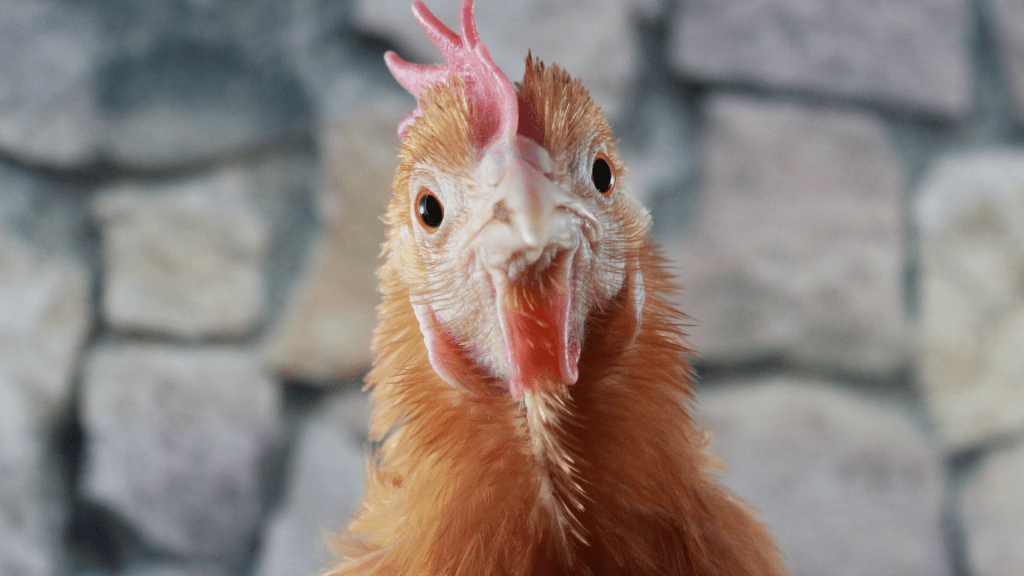
For example, in my backyard, a solemn pact governs our family’s relationship with four chickens—a simple understanding: as long as the hens lay eggs, they receive from me food, shelter, and protection. When egg production wanes, Dottie, Daisy, Myrtle, or Maude may find themselves destined for the cookpot.
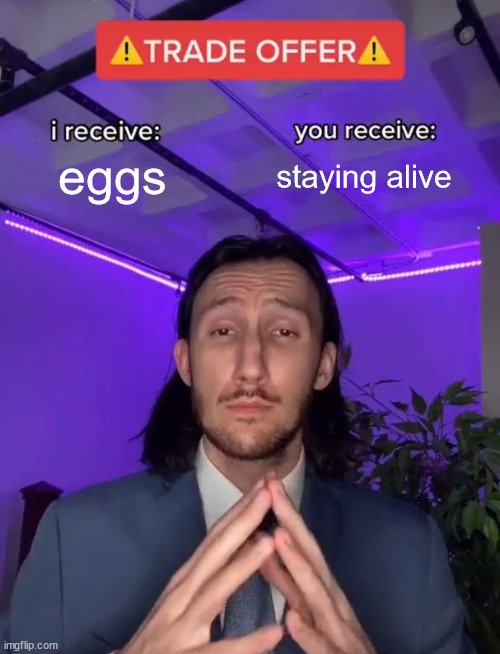
You might note that I have already sabotaged that arrangement by naming them. And you’d be right. A compounding complication is that I have raised them since they were day-old chicks when they would press themselves under my hand to stay warm. I’m … attached. Nevertheless, I have sworn to my wife that they aren’t pets and will be food once they decline in egg production. And I like eating chicken more than paying for an animal who has outlived it’s telos.
Anyway, this social contract extends beyond poultry to encompass other domesticated animals. From goldfish and parakeets to dogs and horses (but not cats), a similar social contract weaves between humans and their companion animals. Owners undertake the responsibility of care, offering nourishment, protection, and a home, while in return, these animal companions enrich our lives with their unique brand of companionship.
It is a subtle dance of reciprocity. “Subtle” because social contracts are often implied and unspoken. It is not a law that you must be quiet in a library, but it is the expectation, or else you suffer the wrath of the librarian. It wouldn’t be that different if it were a law, though; drivers have to follow traffic laws, but they implicitly do so rather than explicitly sign a contract every time they buckle up.
So what happens when the social contract is broken? Many have argued on both the left (also here) and the right that the social contract between the federal government and its people is broken. For example, depending on which part of the political spectrum you sit, the pandemic either saw the social contract broken by people not complying with mask mandates, or broken by the government through overreach.
It should be argued, as Doug Wilson does here, that social contracts predicated on a state of bliss in nature are hokum. We had a covenant between Adam and God, and it was broken the moment he and his wife disobeyed the one thing God told them they couldn’t do. Thereafter, all social contracts have been entered into by sinners. Of course they will be broken. I even anticipate that my chickens will break the social contract when they stop laying; it’s built into my plans for them (even though they aren’t sinners, they exist in a fallen world because of sin, so there).
So if it is inevitable that a social contract will be broken, what does that mean for us?
When I asked that very question in the Google search bar, its AI plugin Bard suggested the following potential options:
- Reform and renegotiation: Individuals and groups may work to reform existing institutions or renegotiate the terms of the social contract to make it more equitable and representative. This could involve changes to laws, policies, or even the structure of government itself.
- Resistance and protest: Some may choose to actively resist what they perceive as an unjust system, through protests, civil disobedience, or other forms of non-violent resistance.
- Revolution and radical change: In extreme cases, a complete breakdown of the social contract can lead to revolution or other forms of radical change, as people attempt to overthrow the existing order and build a new one.
Which is not alarming at all.

Likewise, Britannica says,
… the state is a moral person whose life is the union of its members, whose laws are acts of the general will, and whose end is the liberty and equality of its citizens. It follows that when any government usurps the power of the people, the social contract is broken; and not only are the citizens no longer compelled to obey, but they also have an obligation to rebel.1
Bard’s answer is in order of least extreme to most extreme, which seems to imply that when a social contract is broken you start with reform and renegotiation, rather than starting with the guillotine. The riots peaceful protests of the last three years show that a lot of people no longer want to do the first option, and in some cases, want to jump to the last. Both the Boogaloo Bois and BLM want to overthrow what currently exists. Should they?
No, not like that anyway. We are Reformers, not ravagers. Regardless of what you think about the American experiment, Christians obey the law until it commands you to disobey God (Rom 13:1-7). Likewise, Christians are to pray for their government leaders (1 Tim 2:1-4) and seek the welfare of the state (Jer 29:7).
What if the state breaks the law? Then you start with prayerfully working for reform and renegotiation, then to resistance and protest, and finally to revolution and radical change (to a degree). It is wicked to want war, in so much as that want constitutes a desires for bloodshed, chaos, and death. However, it is not wicked to prepare for or participate in a just war. So continue to do good, and seek good, and uphold the beauty and light of the truth of God rather than worship the dark. But also be like Joseph and prepare for hard times.
That food shall be a reserve for the land against the seven years of famine that are to occur in the land of Egypt, so that the land may not perish through the famine.
Genesis 41:29-36
As for me, I’m going to continue pursuing food independence. I’m going to get more chickens, and hopefully rabbits. We are going to get our soil tested and find out why our garden didn’t grow well this year. We are going to keep working out our faith with fear and trembling, as well as with rake and hoe, because we want to honor God and be stewards of what he has entrusted to us.
But in addition to victory gardens, you should prepare for what happens if things ever turn violent. Speak softly, but carry a big stick. Preferably one you train with and know how to wield.
And they said, “Look, Lord, here are two swords.” And he said to them, “It is enough.”
Luke 22:36-38
But honestly, you carry the bigger stick because the state is subject to God. He’ll punish those who should have been shepherds rather than sheep.
1 Britannica, T. Editors of Encyclopaedia. “social contract.” Encyclopedia Britannica, January 1, 2024. https://www.britannica.com/topic/social-contract.

 Awake! Put on strength!