
Authority, Rebellion, and the Unyielding Sovereignty of Christ
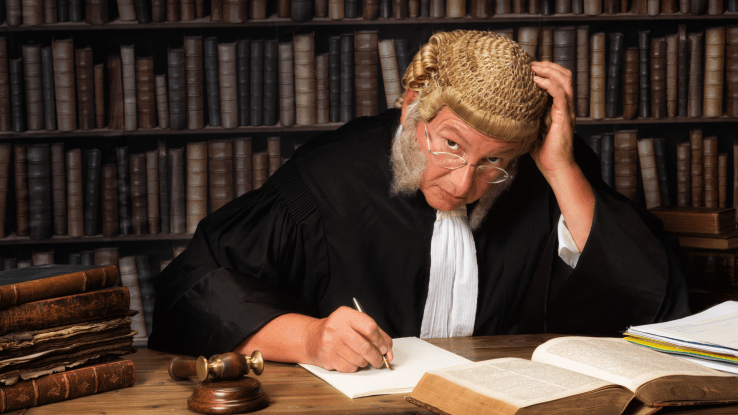
We all hate authority. It rankles us. It tells us no when we want a yes, we deconstruct our faith because of it, and we make an endless amount of film and music based on authority issues. That is because it is part of our DNA, rooted in the rebellion of our flesh against God’s authority. The enduring allure of Satan’s question, ‘Did God really say … ?’ still sells today, fueled by our recognition of the brokenness inherent in authority structures. Adam and Eve’s original sin was an attempt to supplant God, assuming the role of their own gods and rulers. All forms of governance, from the family unit to the nation-state, echo a truer, unblemished authority in God. Despite often appearing fractured or obscured, they still reflect that authority.
Occasionally, we tolerate authority when we perceive personal benefits. For example, individuals endure homeowners’ associations (HOAs) for the aesthetic cohesion of their neighborhoods. This acceptance represents a social contract, an agreement to live by shared standards for mutual benefit.
However, authority can deviate and become oppressive, as seen in HOAs acting as a basic form of tyranny. Seriously, read any story on the internet about petty HOA boards wielding their power like the One Ring and you’ll be ready to load a musket.

But it’s not just planet Camazotz. Other examples include overbearing fathers causing grief to their children (Eph 6:4), social media platforms being inconsistent with how they enforce their community standards, and politicians telling their constituents to stay home for Thanksgiving during the pandemic while eating out at fancy restaurants with friends. (You know you done messed up when even The New York Times calls out someone on the left.) Both government overreach, and government negligence is an issue. Governments failing to enforce laws neglect their divine duty to their citizens (Rom 13).
As Lord Acton warned, absolute power corrupts absolutely. Our nearest approximation to God’s absolute authority is the law of the land, the U.S. Constitution. However, it is subject to constant reinterpretation, with laws evolving through Supreme Court rulings and legislative sessions. Our legal system operates under Open Theism, constantly changing and being interpreted by diverse communities in post-modernity. But God is immutable and sovereign. He does not change (Heb 13:8; Mal 3:6; Jas 1:17).
While we consent and willingly submit to authorities like governments and HOAs due to perceived benefits, Jesus, as King, doesn’t seek our consent to rule or be King. He merely is, regardless of our acknowledgment. Similar to the Pharisees challenging Jesus, contemporary society, marked by revolutions from industrial to sexual, questions and defies Christ’s authority.
Christ, as the Word, has the final word in all matters.
Mark 11:27-12:12 illustrates our rejection of God’s authority. The Pharisees challenge Jesus, questioning his authority to overturn the merchants’ tables in the temple, to heal on the Sabbath, and to teach certain things. Jesus calls their bluff with a counter-question. The Pharisees chicken out of answering, so Jesus withholds his answer. Then Jesus uses a parable about tenants rejecting a property owner’s authority to underscore the rejection he faces.
Like the tenants, we forget who owns everything. We create what Trent Reznor calls little “empires of dirt,” enforcing our rule and reign while feeling threatened by challenges to that rule, whether as legalists or libertines, conservatives or progressives.
That is why Pharaoh murdered thousands of little Hebrew baby boys in Egypt (Ex 1:22). The rise in population (including those that would become military-age males) was a threat to Pharaoh’s rule. It is also why Herod killed little baby boys in Bethlehem after Jesus was born (Matt 2:16). The birth of the true King challenged Herod’s role as the pretend king.
Jesus holds all authority in heaven and earth, seated on his throne doing as he pleases (Ps 115:3). Christ’s authority remains, whether acknowledged or not. As R.T. France says,
“The cumulative effect of this sequence of controversy is to leave the reader with the impression of Jesus locked in combat with a wide coalition of the most influential people in Jerusalem, but holding his own and ultimately having the last word.”1
In confronting the Pharisees then, and the cultural Pharisees of today, Jesus holds his ground and has the final say.
Which means you and I don’t. And that matters because if we persist in pretending it’s on us, then it will be. Meaning, if Jesus is not your king, and you think you are, then it’s all up to you to make things right and to fully atone the righteous requirement of the law. You’re on the hook. And you’ll be damned.
Christ, as the Word, has the final word in all matters. Like David in the Psalms or Thomas post-Resurrection, we can question and explore, but when we question, ‘Did God really say…?’ we futilely attempt to usurp Christ’s authority. That is where the cross comes in; it rescues us from our attempts at insurrection.
1 R. T. France, The Gospel of Mark: A Commentary on the Greek Text, New International Greek Testament Commentary (Grand Rapids, MI; Carlisle: W.B. Eerdmans; Paternoster Press, 2002), 451.

 Awake! Put on strength!